
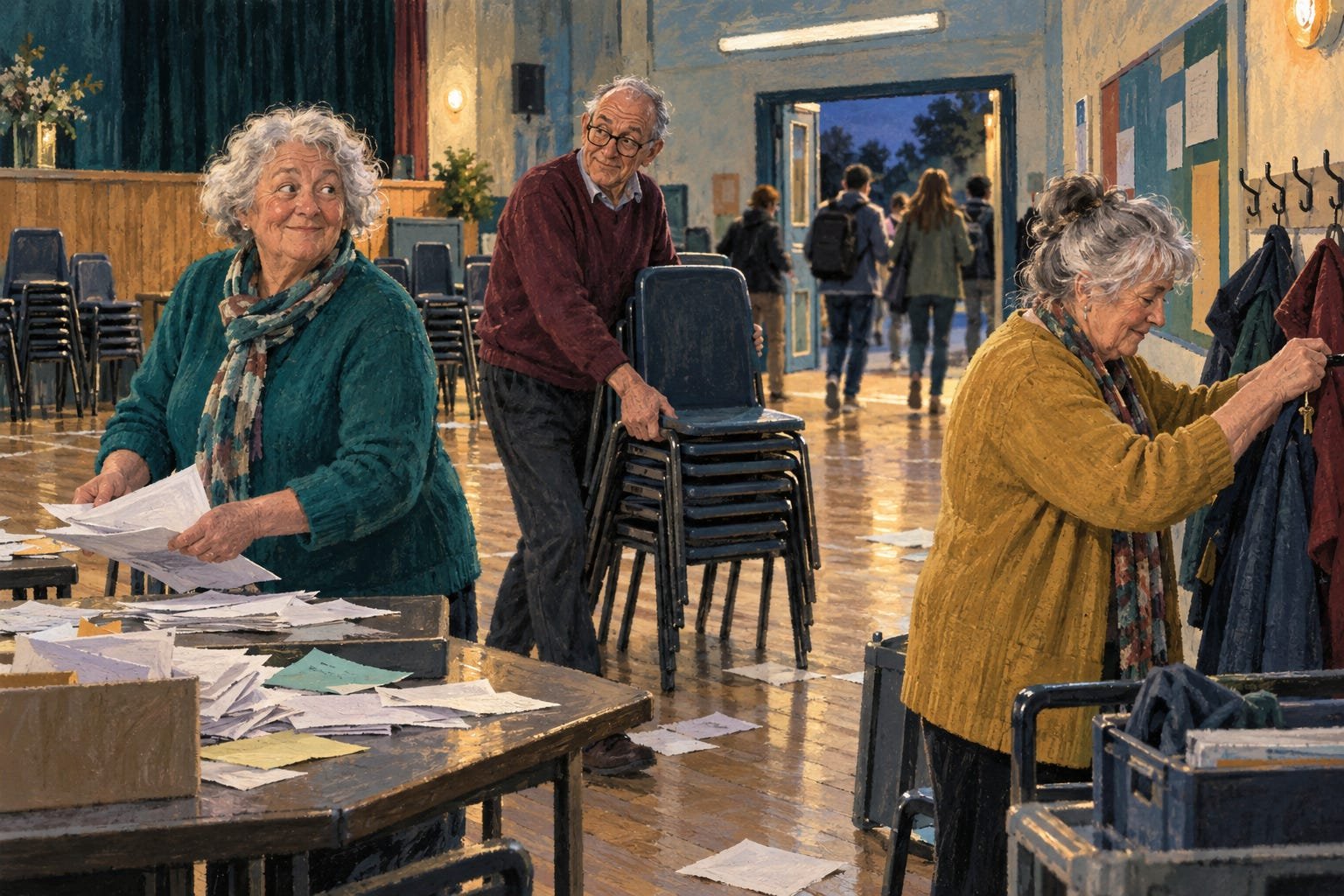
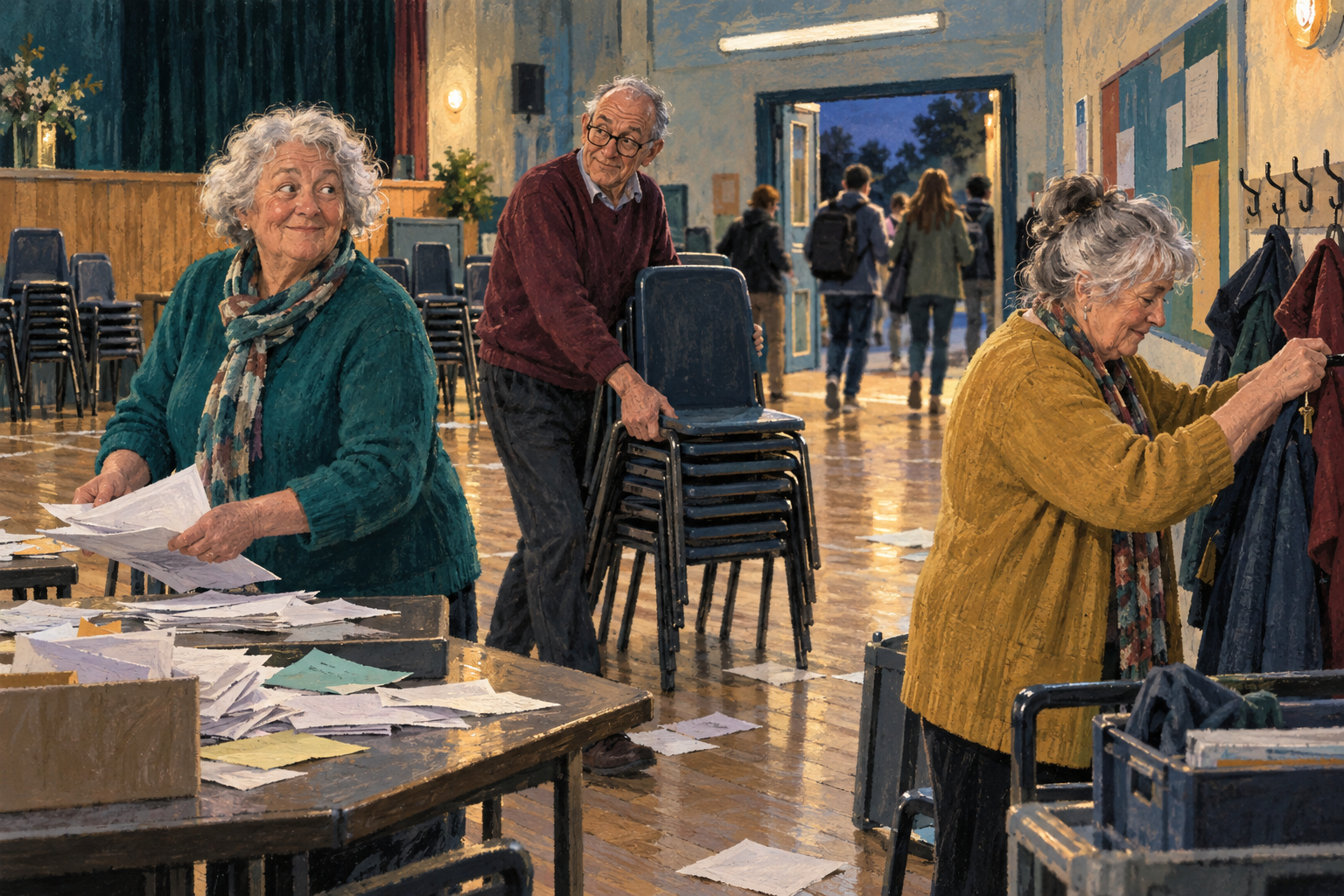
The room was tidy because older people had stayed behind.
That is not a metaphor. It was an actual room, with actual chairs, actual paper cups, actual notices curling at the corners, and the usual pile of abandoned belongings that appears after every public event as if adults are secretly moulting.
The important people had already gone. You can tell who the important people are because they leave first, usually while talking about how valuable everyone is. They carry folders, phones, and the expression of people already late for something more strategic.
The room remained. And in the room were the invisible ones: an older woman collecting forms into a neat pile, another checking the windows were shut, a man lifting chairs with the careful irritation of someone who has been doing practical things since before half the committee discovered lanyards.
Nobody applauded. Nobody called it leadership. The room simply became usable again because people who knew how to leave things properly had not yet left.
A lot of the world runs on people who have become socially transparent. They are on committees, in libraries, behind trestle tables, beside the box of extension leads. They remember who has the key. They know which door sticks.
Older women know this invisibility earlier and more sharply than most men. There is a particular fury in being competent, funny, and alert, and still treated as background furniture because the world decided you passed your display-by date somewhere between useful and inconvenient.
Read more essays like this at Substack, and if this piece landed, I made a short guide called Nobody is Watching Now! at Gumroad. And if you’d like to support the writing, some readers buy me a pot of Yorkshire Tea at Buy Me a Coffee.