
This rewritten version is published for readers arriving through OldGreyThinker.com. The original Substack piece is here: The Phone Call That Knew My Card Number. If you want the essays as they land, subscribe on Substack.
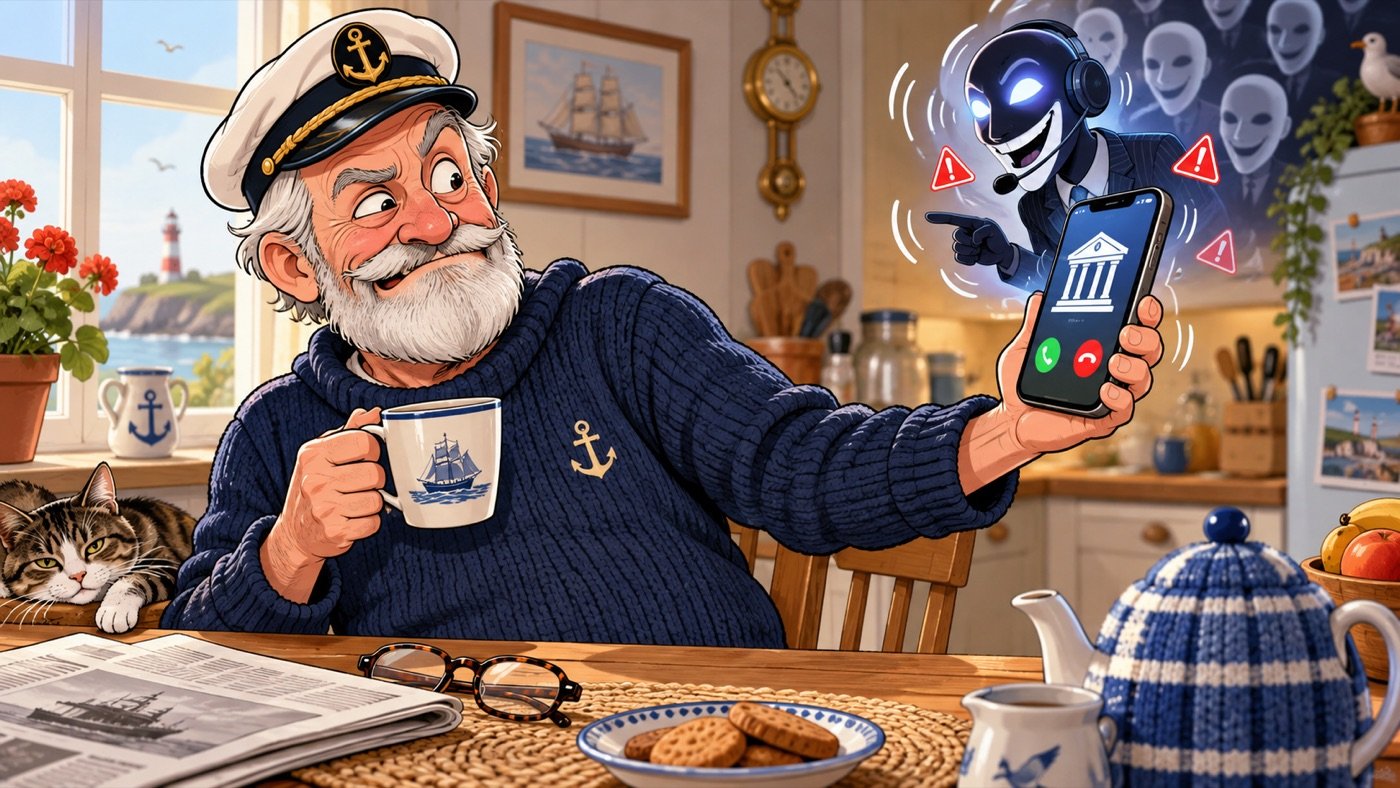
The phone call sounded exactly right. That was the frightening part.
The phone rang at eleven minutes past ten on a Tuesday morning, which I remember because for the next four minutes I looked at the clock far too often. Each time, it had advanced by exactly the right amount. This was reassuring in the most useless possible way. Time, at least, was behaving normally.
The phone was not.
The screen said the name of my bank. Not Unknown Caller. Not a suspicious string of digits from somewhere I have only visited accidentally while changing planes. The actual name. The one that appears when a real person from a real department wants to discuss a real card.
So I answered.
I answered the way I have answered telephones in every job I have had where someone might be on fire, pretending not to be on fire, or trying to persuade me that the fire was a misunderstanding: carefully, politely, and out loud.
The voice was calm. Male. Mid-thirties, perhaps. There was a faint northern note in it, which immediately put me at ease and therefore should have made me suspicious. He gave his name, gave his department, apologised for disturbing me, and said there had been unusual activity on my account.
Then he read out the last four digits of a card I use for one subscription and almost nothing else.
That is the bit that still sits oddly with me.
He did not guess. He knew.
The scam did not sound like a scam
For the first few minutes we had the sort of conversation you have had a hundred times with people who are exactly who they claim to be. Mild bureaucracy. Low-stakes confirmation. Could I confirm the postcode on file? Had I attempted a transaction this morning? Was I aware of a possible security issue?
Nothing was dramatic. Nothing was theatrical. There was no shouting, no threat, no foreign prince, no auntie stranded in a terminal at three in the morning with no wallet and a sudden gift for emotional manipulation.
That was what made it good.
Then the register shifted. Not much. Only a little. The way weather shifts on a bridge watch before the sky has committed itself. Everything still looks fine, but some primitive part of you has already started moving the mugs away from the edge of the table.
He explained that, purely as a precaution, I would need to move funds into what he called a protected holding account while the matter was investigated.
He had the tone exactly right: patient, professional, faintly bored. The tone of a man who has said this sentence eight hundred times and has no personal stake in whether you find it alarming. It is an excellent tone to counterfeit because it makes you feel slightly foolish for hesitating.
I have spent a working life being lied to by people who were good at it. Across radios, across tables, across rooms where everyone had agreed not to say the obvious thing. I like to think I have developed a nose for the moment when a story begins to sweat.
But this story did not sweat.
It breathed evenly. It wore a headset. It knew my card number.
The question that broke the spell
I asked him one small question.
It was not clever. It would not get a dramatic soundtrack in a television reconstruction. I simply asked him to confirm which branch had originally opened the account.
That detail lives somewhere dull and old. Not on a card. Not on the front page of a statement. Not in the sort of database you can scrape, buy, leak, repackage, or feed into a cheerful little criminal script before breakfast.
There was a pause.
Not a long one. Half a second, perhaps. But if you have spent enough time listening for the change in a voice, half a second is plenty. It was the wrong kind of silence.
He recovered smoothly. Said he would need to pull that up. Said he would call me back.
He never did.
I rang the number printed on the actual card. I sat through the actual hold music, which remains one of the most punishing inventions in modern civilisation. Eventually an actual human being told me there was nothing unusual on the account, that they do not have protected holding accounts, and that nobody from the bank had rung me that morning.
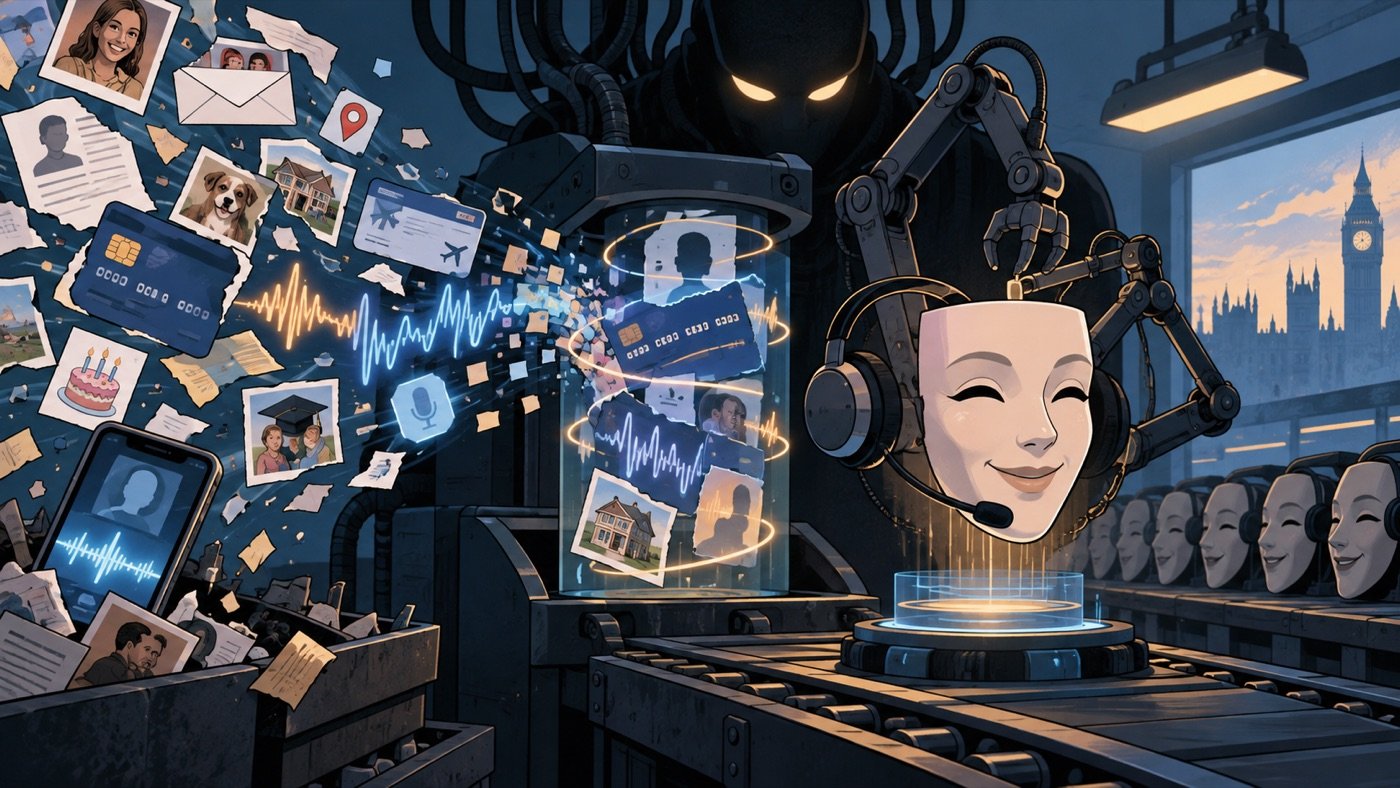
So the caller had not been a bank employee. He may not even have been a he in the traditional sense. The voice had the polish of something built to sound human: trained on the patience, rhythm and vocabulary of service calls; armed with enough leaked personal data to get through the first gate; and good enough to keep a suspicious old sailor on the line longer than I care to admit.
This is not the old scam with a better suit
The old version of this crime relied on obvious weakness. Bad spelling. Absurd urgency. A stranded relative who has somehow forgotten every other way of contacting you. That version let the rest of us feel comfortably superior to the victims, which was always one of its most dangerous features.
This version is different.
It does not depend on you being stupid. It depends on the counterfeit being excellent.
It can clone voices from scraps of online video. It can combine old data breaches with new AI tools. It can sound like your bank, your grandchild, your colleague, your solicitor, your delivery company, your accountant, or the calm man in the fluorescent office who has apparently been assigned to help you not lose everything.
The detail that frightens me is not that criminals lie. Criminals have always lied. The detail that frightens me is that the lie no longer has to carry the usual burden of being human.
A human liar has nerves. A human liar gets tired. A human liar occasionally overacts, forgets, rushes, or says the thing that does not quite fit. A machine-assisted liar has none of those decencies. It has patience. It has rehearsal. It has data. And next month it will probably be a little better.
That is why this matters particularly to older people, though not only to older people. Older people are often described as if they are uniquely gullible, which is both lazy and insulting. The real issue is not gullibility. The real issue is trust meeting industrialised impersonation.
If a voice knows enough true things, we are tempted to believe the next thing it says.
The new rule: hang up kindly
I do not think the answer is to become paranoid, though I admit paranoia is having a respectable run at the moment. The answer is to change the ritual.
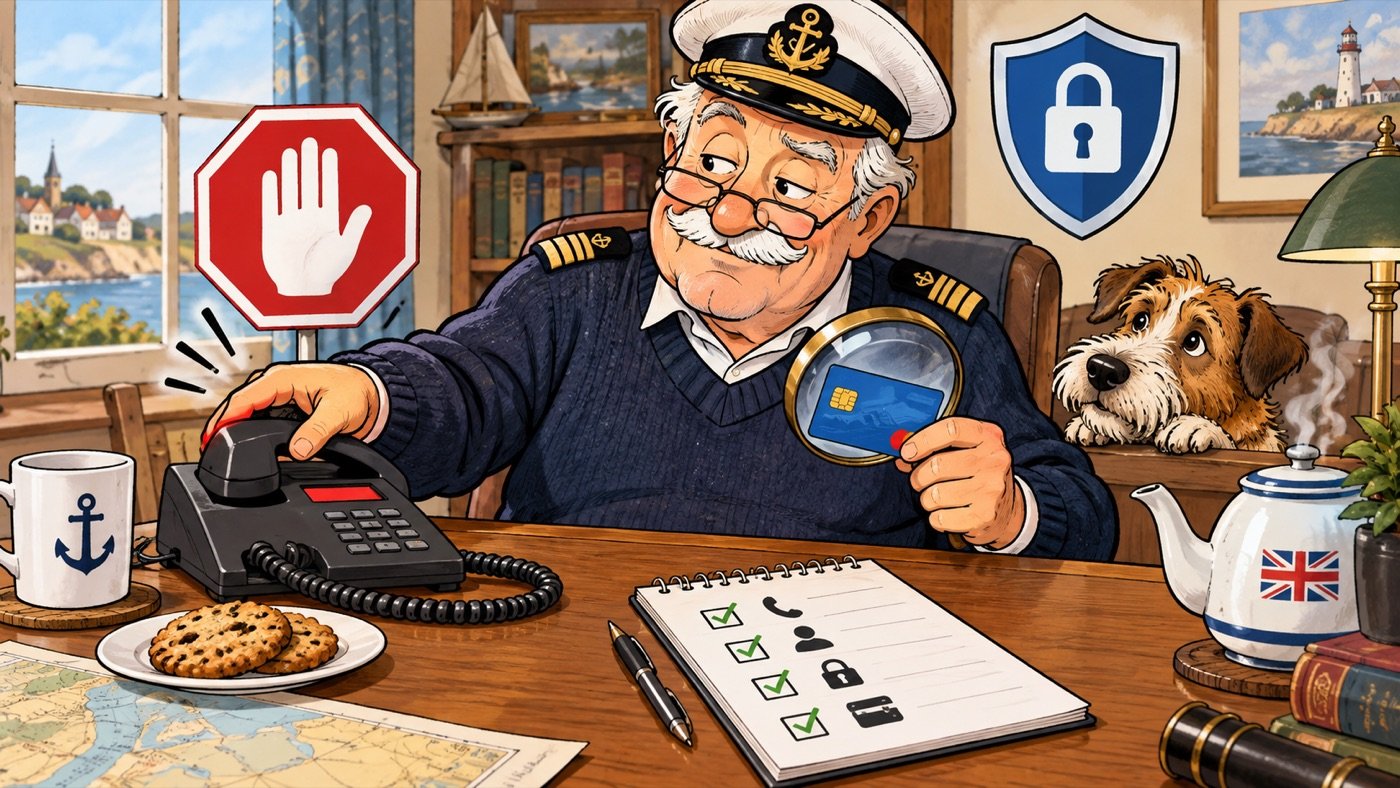
If the bank rings, thank them and hang up. Then ring the number printed on your card or log in through the official app. If a relative rings in distress and money is involved, hang up and call them back on the number you already have. If anyone says there is no time, assume that time is precisely what they are trying to steal from you.
Do not move money because a voice told you to. Do not confirm security details because the caller already knows a few true things. Do not let urgency do the thinking. The kettle was invented for a reason. Use it.
And perhaps have one private question ready. Something dull, old, specific and not easily found online. Not a password. Not a security question you reuse elsewhere. Just a tiny anchor from the real world. The sort of detail that lives in memory rather than a database.
Mine was the branch where the account began. Yours might be something else entirely. The point is not to outsmart every criminal. That is a mug’s game. The point is to interrupt the script.
The bit that stayed with me
I would like to tell you I came away feeling sharp. I did not.
I came away doing the arithmetic. How many people I know would have answered the branch question automatically, because why would you not help your own bank protect you? How many would have moved money because the caller sounded calm? How many would have been embarrassed to ring back and check? How many would have assumed that knowing the last four digits of a card meant the voice belonged to the right side of the line?
That is the quiet danger now. Not the obvious fraud. Not the badly typed nonsense. Not the theatrical villainy.
The danger is the ordinary voice, the reasonable tone, the professional pause, the small true detail at the beginning of a larger lie.
The phone call knew my card number.
It did not know enough.
Read the original Substack article: The Phone Call That Knew My Card Number.
Subscribe on Substack: The Old Grey Thinker newsletter.
Go deeper: I have also put extended guides and resources on my Gumroad page, including practical tools for thinking, writing, and building a second-act publishing life without sounding like a machine in a cardigan.